If you’ve ever bought Chinese herb extract for supplements, skincare, or even that calming herbal tea you keep in your pantry, you’ve probably wondered where exactly it all starts. As someone who runs a small but no-nonsense Chinese herb extract supply business, I get questions about this all the time—usually from fellow brand owners, formulators, or even regular folks just curious about what goes into the stuff they use. A lot of people assume it’s just “random herbs from a garden,” but there’s way more to it than that. Let’s break down the real raw materials that actually make up Chinese herb extract, and why cutting corners on these parts is why so many extracts end up weak or inconsistent. Chinese Herb Extract

First off, let’s get one thing straight: the base of every good Chinese herb extract is the actual whole herb (or parts of it), but not just any herb. This is non-negotiable—for us, we only source from farms that follow cGMP (current Good Manufacturing Practices) because if the plant material is sketchy, the extract will be too. I’m talking about the specific plant parts too, not just the entire plant. For example, ginseng? We use only the 4-6 year old roots, never the leaves or stems—those have way less of the active ginsenosides that people actually want. Astragalus? Definitely the dried roots, harvested before the plant flowers. Wait, yeah, flowering astragalus roots have half the polysaccharides that make it so good for immune support. And it’s not just the roots: for goji berries, we use the dried ripe fruit, not the ungreen ones, because unripe gojis have less zeaxanthin and more bitter compounds that mess with the extract taste. We don’t mess around here—if the farm can’t prove their harvest time and plant part specs, we walk away. That’s why our extracts work the way they should, not like the cheap stuff that does nothing on the shelf.
But the raw materials aren’t just the plants themselves. There’s a whole other layer of what’s called “processing aids” that are totally necessary, but a lot of suppliers try to hide these or use junk ones. Let’s be real—you can’t extract herb compounds without a solvent, right? The solvent has to be food-grade or pharmaceutical-grade, depending on what the extract is for. For dietary supplements, we use things like food-grade ethanol or water, which are super common in Chinese herb extraction because they’re safe and get most of the good compounds out. For skincare extracts, sometimes we use glycerin too, which is gentle on skin, not harsh. A lot of cheap suppliers will use cheaper solvents that leave residues, or even skip proper purification steps, but that’s a no-go for us. We also use filtering aids like diatomaceous earth or activated charcoal to remove any leftover plant debris or impurities, and those are also food/pharm grade—no weird chemicals. Oh, and sometimes we use enzyme preparations to break down tough plant cell walls if we’re extracting something really dense, like turmeric. That’s just standard practice, not a shortcut.
Now, here’s a part no one really talks about: the pre-extraction materials, the stuff that happens before the plant ever even gets to the extraction lab. This is where the quality of the extract is either made or broken. First, the growing conditions of the herb. We only work with farms that are either organically certified or follow strict pesticide limits because even a tiny bit of residual pesticide will carry over into the extract. I’ve had brand owners come to us before with extracts that tested positive for heavy metals, and it’s always because their supplier used plants from a farm that’s near an industrial area or used too much pesticide. We test every single batch of incoming plant material for heavy metals, pesticides, and microbial contamination—yes, even the organic ones—because no certification is 100% foolproof. Also, harvest conditions: for example, if you harvest licorice root in the rain, it absorbs too much moisture, which leads to mold during drying, and moldy plant material makes moldy extract. We require farms to harvest only on dry days, and dry the herbs within 24 hours of harvesting to prevent that. That’s the kind of small, specific detail that most customers don’t ask about, but makes all the difference when their supplement is sitting on a shelf for a year.
Wait, let’s not forget the standardization materials, if that’s part of the extract. A lot of people think standardization is a bad word, but it just means we’re making sure the extract has a consistent amount of the active compound that it’s supposed to. For example, if we make a turmeric extract, we standardize it to 95% curcuminoids, which is the active part that’s good for inflammation. To do that, we might add a tiny amount of curcumin that’s already been extracted from turmeric and purified, but it’s not a filler—it’s just to make the potency consistent. A lot of knockoff suppliers will skip this, so one batch of turmeric extract has 5% curcumin and the next has 10%, which is garbage for formulators who need to dose their supplements accurately. We only use purified active compounds from the same herb family, so there’s no weird cross-contamination, and we test every batch after standardization to make sure the numbers are exactly where we say they are.
Now, I know some of you might be thinking, “Hey, are there any other raw materials?” Like, what about excipients if the extract is a powder? Oh right! A lot of our extracts are sold as powders, not liquids, so we use carriers that are safe and don’t add any unnecessary stuff. We use things like rice flour or maltodextrin for that—again, food-grade, no fillers or artificial additives. For liquid extracts, sometimes we use small amounts of preservatives if it’s going to have a long shelf life, but only natural ones like grapefruit seed extract or vitamin E, not parabens or synthetic preservatives. We hate using preservatives, so we make sure our liquid extracts are either bottled in dark, airtight bottles that prevent spoilage, or use a natural preservative that doesn’t change the extract’s properties.
Let me give you a real example to make this concrete. Last quarter, we got a request for a goji berry extract from a skincare brand that was used in facial serums. They’d been working with another supplier, but their extract was too bitter and stained the serum orange, which messed up their product labeling. We walked them through our raw materials: we source only dried, ripe goji berries from a farm in Ningxia (they’re famous for gojis, and for good reason), tested every batch for pesticide residue, used food-grade ethanol and water as solvents, filtered out all the plant debris, and standardized it to 20% zeaxanthin, which is the active compound for brightening skin. The extract we sent them was pale red, no bitterness, and didn’t stain their serum at all. They came back and said their sales went up 30% because people loved how smooth their serum applied—all because we didn’t skip on the raw materials that the other supplier cut corners on.
Here’s the thing: as a Chinese herb extract supplier, I’m not here to sell you “just extract.” I’m here to sell you a product that works, that you can stand behind, and that doesn’t have hidden junk. A lot of people in this space cut corners on raw materials to make a quick buck: they use inferior plant parts, cheap solvents, or even mix in random fillers to make the extract weigh more. But that’s not how we do business. We test every step, from the farm that grows the herbs to the final packaged extract that leaves our warehouse, because we know that if our customers don’t trust our product, their customers won’t either.
Wait, I should also mention that there’s a difference between single-herb extracts and combined formula extracts, right? For combined formulas, like the ones used in traditional Chinese medicine (TCM) formulas, each individual herb still has to meet all the same raw material standards. We don’t just mix random herbs together and call it a formula—each herb is sourced specifically, harvested at the right time, and extracted separately before we combine them in the correct ratio. If you mess up one herb in the formula, the whole thing is off. For example, if you have a formula for digestive health that includes ginger and peppermint, the ginger has to be the right harvest time and the peppermint has to have the right amount of menthol, otherwise the formula won’t work as intended. That’s another layer of raw material care that a lot of suppliers ignore, especially when they’re making TCM extracts for the supplement market.
Now, if you’re a formulator, brand owner, or even someone who’s just looking for a reliable extract to use for your own product, I get that finding a supplier you can trust is hard. There are so many companies out there that make big promises but deliver subpar stuff, because they’re cutting corners on the raw materials. At the end of the day, Chinese herb extract is only as good as what goes into it. If you’re buying an extract that’s cheap, it’s almost always because the raw materials are cheap—cheap plant parts, unsafe solvents, untested growing conditions. We don’t do that, and we never will.
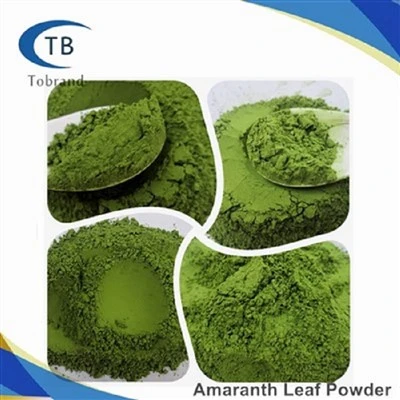
If you’re looking to source consistent, high-quality Chinese herb extract for your next project, or if you have questions about our raw materials or testing processes, hit us up to chat. No hard sell, just honest talk about what we do and how we can help your product be the best it can be.
Cosmetic Raw Materials References:
- World Health Organization (WHO). Guidelines on Quality Control of Herbal Medicines. Geneva: WHO Press; 2011.
- U.S. Food and Drug Administration (FDA). Current Good Manufacturing Practice in Manufacturing, Packaging, Labeling, or Holding Operations for Dietary Supplements. Silver Spring, MD: FDA; 2022.
- Chinese Pharmacopoeia Commission. Pharmacopoeia of the People’s Republic of China, Volume 1. Beijing: China Medical Science Press; 2020.
- Zhang Y, Li X, Wang H. Quality assessment of Chinese herbal extracts based on raw material origin and harvest time. Journal of Ethnopharmacology. 2019;245:112198.
- European Medicines Agency (EMA). Guideline on Herbal Medicinal Products: Quality of Herbal Drugs and Herbal Drug Preparations. Amsterdam: EMA; 2021.
Xi’an Tobrand Group Inc.
As one of the most professional chinese herb extract manufacturers and suppliers in China, we offer a wide range of products with superior quality. Please feel free to buy the best chinese herb extract for sale here from our factory. Good service and reasonable price are available.
Address: Furong New World Building 2 Room 1502, Furong West Road, Yanta District, Xi’an, Shaanxi, China
E-mail: info@tobrandcn.com
WebSite: https://www.to-brandcn.com/
