As a supplier of titanium bars, I often encounter questions from customers about the formability of titanium bars. Formability is a crucial aspect when it comes to using titanium bars in various applications, and understanding it can significantly impact the success of a project. In this blog, I will delve into what formability of titanium bars means, the factors that influence it, and its implications for different industries. Titanium Bars
Understanding the Formability of Titanium Bars
Formability refers to the ability of a material to undergo plastic deformation without cracking or fracturing. In the context of titanium bars, it is about how easily these bars can be shaped into different forms such as bending, rolling, forging, and machining. Titanium is known for its excellent strength – to – weight ratio, corrosion resistance, and high – temperature performance. However, its formability is a complex characteristic that requires careful consideration.
Titanium bars come in different grades, each with its own unique properties and formability. For example, commercially pure titanium (CP titanium) is generally more formable compared to some of the high – strength titanium alloys. CP titanium has lower alloying elements, which gives it greater ductility and makes it easier to shape. On the other hand, titanium alloys like Ti – 6Al – 4V, which is widely used in aerospace and medical applications, have higher strength but may be less formable due to the presence of alloying elements that increase the material’s hardness.
Factors Influencing the Formability of Titanium Bars
1. Chemical Composition
The chemical composition of titanium bars plays a vital role in determining their formability. As mentioned earlier, the presence of alloying elements can significantly affect the material’s ductility. For instance, aluminum in titanium alloys can improve strength but may reduce formability. Vanadium, on the other hand, can enhance the alloy’s workability to some extent. The balance of these elements needs to be carefully controlled to achieve the desired formability.
2. Microstructure
The microstructure of titanium bars also has a profound impact on formability. A fine – grained microstructure generally offers better formability than a coarse – grained one. During the manufacturing process, heat treatment and deformation can be used to control the grain size. For example, annealing can refine the grain structure and improve the formability of titanium bars. However, improper heat treatment can lead to an unfavorable microstructure, resulting in reduced formability and potential cracking during forming operations.
3. Temperature
Temperature is a critical factor in the formability of titanium bars. Titanium has a relatively high melting point, and its formability is highly temperature – dependent. At room temperature, titanium is less formable, and significant force is required to deform it. As the temperature increases, the material becomes more ductile, and the formability improves. However, excessive temperature can also lead to oxidation and other metallurgical changes, which may affect the material’s properties. Therefore, it is essential to select the appropriate forming temperature based on the specific grade of titanium and the forming process.
4. Strain Rate
The strain rate, which is the rate at which deformation occurs, can influence the formability of titanium bars. At low strain rates, the material has more time to deform, and the formability is generally better. High strain rates, such as those encountered in high – speed forming processes, can lead to increased stress and reduced formability. This is because the material may not have enough time to accommodate the deformation, resulting in cracking or other defects.
Formability in Different Industries
1. Aerospace Industry
In the aerospace industry, titanium bars are widely used due to their high strength – to – weight ratio and corrosion resistance. However, the complex shapes required for aircraft components demand excellent formability. For example, titanium bars are used to manufacture engine components, structural parts, and landing gear. The formability of titanium bars allows these components to be precisely shaped to meet the strict design requirements of the aerospace industry. High – strength titanium alloys like Ti – 6Al – 4V are often used, and special forming techniques such as hot forming are employed to achieve the desired shapes while maintaining the material’s integrity.
2. Medical Industry
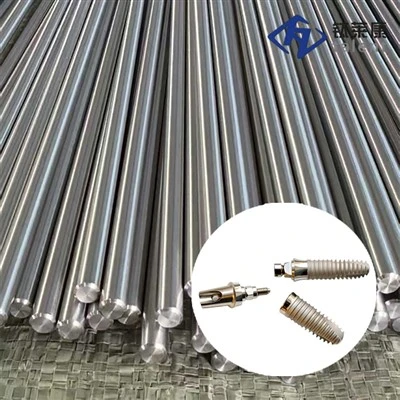
Titanium bars are also extensively used in the medical industry, particularly for implants. The formability of titanium is crucial in this application as implants need to be customized to fit the patient’s anatomy. Commercially pure titanium is commonly used for medical implants due to its biocompatibility and good formability. It can be easily machined and shaped into various forms such as screws, plates, and rods. The ability to form titanium bars into complex shapes ensures that the implants can be accurately placed in the body, reducing the risk of complications and improving patient outcomes.
3. Automotive Industry
In the automotive industry, titanium bars are used in high – performance applications where weight reduction and strength are essential. Formability is important for manufacturing parts such as exhaust systems, suspension components, and engine parts. Titanium’s formability allows these parts to be fabricated into the required shapes, improving the overall performance and efficiency of the vehicle. However, the cost of titanium and its formability challenges need to be carefully balanced to make it a viable option for mass – production in the automotive industry.
Testing and Evaluation of Formability
To ensure the quality and formability of titanium bars, various testing methods are employed. One common method is the tensile test, which measures the material’s strength and ductility. By analyzing the stress – strain curve obtained from the tensile test, we can determine the material’s yield strength, ultimate tensile strength, and elongation, which are important indicators of formability.
Another testing method is the bend test. In this test, a titanium bar is bent to a specific angle, and the quality of the bend is evaluated. A successful bend without cracking or other defects indicates good formability. Additionally, forming limit diagrams (FLDs) are often used to predict the formability of titanium bars in different forming processes. FLDs show the maximum strain that a material can withstand before failure, providing valuable information for process design and optimization.
Implications for Our Customers
As a supplier of titanium bars, understanding the formability of our products is crucial for meeting our customers’ needs. We work closely with our customers to select the appropriate grade of titanium based on their specific application requirements. For customers who require high – formability, we can recommend commercially pure titanium or alloys with better ductility. For those who need high – strength components, we can provide guidance on the forming processes and heat treatments to ensure that the desired formability is achieved without sacrificing strength.
We also offer technical support to our customers during the forming process. Our team of experts can provide advice on the optimal forming temperature, strain rate, and other parameters to ensure successful forming operations. By providing high – quality titanium bars with excellent formability and comprehensive technical support, we aim to help our customers achieve their project goals efficiently and cost – effectively.
Conclusion
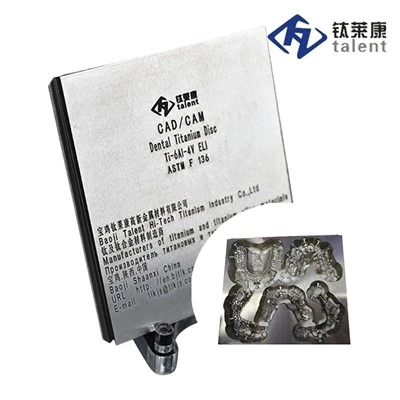
The formability of titanium bars is a complex and important characteristic that depends on various factors such as chemical composition, microstructure, temperature, and strain rate. Understanding these factors is essential for selecting the right grade of titanium and optimizing the forming process for different applications. Whether it is in the aerospace, medical, or automotive industry, the formability of titanium bars plays a crucial role in the success of a project.
Titanium Plates If you are interested in purchasing titanium bars for your project and have questions about formability or any other aspects of our products, we encourage you to contact us for a detailed discussion. Our team is ready to provide you with the best solutions and support to meet your specific needs.
References
- ASM Handbook, Volume 2: Properties and Selection: Nonferrous Alloys and Special – Purpose Materials.
- Titanium: A Technical Guide, Second Edition by Don Eylon.
- Journal of Materials Science and Technology for research on titanium formability.
Baoji Tailaikang High-Tech Metal Materials Co., Ltd.
With abundant experience, we are one of the most professional titanium bars manufacturers and suppliers in China. Please feel free to buy titanium bars for sale here and get pricelist from our factory. For price consultation, contact us.
Address: No. 1, Southeast Cross of Gaoxin Avenue and Fenghuang 3rd Road, High-tech Development Zone, Baoji City, Shaanxi Province, China
E-mail: sale@tlkjs.com
WebSite: https://www.tlkmetal.com/
